Showing posts with label Homesteading. Show all posts

Wednesday, July 18, 2012

Duck dreams!

A few days ago my daughter ask me what was the biggest breed of duck.We went to the Internet of course and found out that the Aylesbury duck is considered one of the largest breeds along with the Pekin. I found the information from The American Livestock Breed Conservancy,http://albc-usa.org/ This website lists heritage breeds for farm animals that are critical,threatened or on watch status.One of the best things you can do for your farm is decide to raise heritage breeds,call the ALBC , find a breeder and give them a call.Help save these breeds from disappearing!
This is what we found about the Aylesbury duck.  "In the Vale of Aylesbury, forty miles north of London, Buckinhamshire 'duckers' were renowned by 1800 for the production of England's finest white-skinned market ducklings.Ó (Holderread, 68) Aylesbury ducks were held in high esteem not only for their for their white skin and unusual pink bill, but also for their large size, ability to produce eggs in the winter months, fast growth, light bone, and high percentage of mild-flavored meat. (Holderread, 68) This duck breed was one of the first to arrive in United States from Europe. Ayelsburys were exhibited in 1849 at the inaugural poultry show in Boston, Massachusetts and were included in the first publication of American Standard of Perfection published in 1874 by the American Poultry Association. The Aylesbury duck is a superior meat breed with pure white plumage, white skin, (a unique attribute since most ducks have yellow skin) orange feet and legs, dark grayish blue eyes and an unusually long, straight pinkish-white bill. It has a long body, horizontal carriage, and a characteristically straight, deep keel that nearly reaches the ground. The Aylesbury is described as "slow moving, and exceptionally tame.There is a critical need for more conservation breeders of Aylesbury ducks. Their large size, white skin and white plumage make them an excellent market bird and a great addition to any small farmstead or backyard producer's flock.
 When I called the ALBC I was told that there was only one breeder of these ducks in the US.I think they consider a breeding flock one that has 50 birds or more.I was given the name of Frank Reese of the Good Shepard Ranch in Kansas, .http://www.goodshepherdpoultryranch.com/index.html. Mr Reese spent some time talking to me and gave me a lot of information on Aylesbury ducks and poultry in general. I learned that if you want a breed true to standard then buy from a breeder that is raising heritage birds,not from a hatchery as those birds have strayed from the breed standard. Mr. Reese's advice was to join the American Poultry Association,http://www.amerpoultryassn.com/ and if you are serious about raising heritage birds then also subscribe to The Poultry  Press,http://www.poultrypress.com/.Going to the state fair and checking out the poultry is also a good idea. We talked about feed and what should go into it. Mr. Reese blends his own feed for the ducks,chickens,turkeys and geese that he raises. Duck feed should be high in fiber and fat(fish meal is good for the fat).Contacting a commercial bakery and getting their stale remains is great for the birds also as it has vitamins already added to it.I found out that if you have chickens picking on each other then give them tomatoes with salt and the picking would stop(good to know)
 Mr. Reese said the best books on waterfowl to read were the black and white version of The Standards of Perfection,anything by Dr. Marsden(haven't found much info on him yet) Oscar Grow who wrote Modern Waterfowl Management and Dave  Holderreed,http://holderreadfarm.com/ .
 I asked Mr. Reese if he brought new birds in to strengthen his flock or just eggs to hatch. He only brings in eggs to hatch as he has to much to lose if a new bird brought in has a disease or something.One diseased bird can wipe out an entire flock (scary thought),He vaccinates the chicks right after they hatch to prevent this from happening.
 I was told that there was another breeder of Aylesbury ducks in the US and he was actually here in Arkansas. Mr. P. Allen Smith is also a breeder and had bought his large flock from Mr. Reese.I was very excited to hear this! I had just found Mr. Smith on facebook and it seems that everyone I talked to knew who he was.Evidently he is a celebrity,http://www.pallensmith.com/. I am in contact with his farm and hopefully by spring I will be a beginning breeder of Heritage Aylesbury ducks!
 When we started this farm journey I figured we might have a couple of ducks along with the chickens,never dreaming I would fall in love with these funny little birds. We have 3 Muscovy's, 1 Black Swedish and 6 Pekins at the moment,I really need to build a pond!
 
These are our ducks,


                      Do you raise ducks or are you thinking about it? What breed tugs at your heart?


Blessed Be!
one innocent question can set your feet on a different path!

Sunday, April 15, 2012

Raising Miniature Livestock

   When we dreamed about raising our own animals for food I always wanted miniatures. Miniature cows,pigs,goats,sheep and donkeys. Research had shown they would be easier for me and the girls to handle,take up less space and wouldn't require as much grain. We are still deciding on exactly which breed of each we will end up with. As of now we have 1 ranling(painted desert) 1 nubian buckling,2 min. rabbits,an assortment of chickens,2 pekin ducks and as of yesterday 1 pot belly pig.
As I was looking up pot bellied pigs last night I was surprised at the lack of information on raising them for meat. There was a ton of websites extolling their virtues as pets but very few about the meat they could provide a family.I finally found a good website about them and was surprised to see a page about the hate mail they had received. I was even more surprised to find out that several farmers had gone underground or stopped raising these pigs altogether because of the harassment they received from individuals or groups who consider them only as pets.
    Here is a little background info on these pigs from Raising Miniature Livestock.
In 1985,Canadian zoo director Keith Connell traveled to Vietnam and brought back 18 pigs of  the one breed,planning to breed and sell them to other zoos in North America.In 1986 he sold some to American pet breeders and the potbellied craze took off.Pretty soon everyone was raising and selling these pigs as pets thinking they wouldn't get much bigger then when they bought them.Yes, potbellied pigs are smaller than the standard domestic pigs but they can reach up to 200 lbs or more. Here people were house training these little pigs but pretty soon didn't want a 150-200 lb pig in their house. Worse,owners quickly discovered that pigs are smart,strong willed and they live their lives from a pigs point of view.Behaviors like rooting(all the linoleum from the kitchen floor),chewing(interior walls) and nipping to establish a place in the herd(which comprised the humans in their household) upset pig owners very much! Owners who worked through problems with their house pigs loved them,they ones who didn't begin giving them away.Pig sanctuaries sprang up across the country and humane groups became inundated with unwanted pigs,yet promoters breeding more piglets because there were still interested new buyers.
  In Vietnam and Thailand these pigs are raised for meat as are other animals we in America only raise in pet status.We plan on raising potbellied pigs along with American Guinea hogs as livestock to provide meat for our family and friends.
The American Guinea hog  is not a guinea pig nor is it a potbelly pig. The Guinea hog is small, weighing 150-250 pounds and standing about 17 inches as an adult. They are black and often hairy with upright ears, and a curly tail. These hogs are long and lean. They have the appearance of a small bacon hog, although they are classified as a lard hog.  The background of the guinea hog is mysterious. There is some discussion of them having a West African origin with Essex blood mixed in as well. Guinea hogs are unique to America. In the late 1800's to early 1900's, they were a popular breed. These are considered a rare heritage breed and farmers are working on bringing them back into popularity for small homesteads.(http://rudugastsideal.com/)
                                          
   It will be interesting to see what we eventually end up with on our farm and what the journey holds along the way.


 Blessed Be.

Sunday, March 25, 2012

Life on the farm....

  The last couple of months have been a little busy around here. What with having hardly any winter(2 days of lt. snow) and quite a few warm days we have been able to get more things done outside. We now have 2 rabbits,the Lion head(Ninja) and a Holland Dwarf(Dovie) and a Painted Desert ramling(Boomerang). What with the chickens,ducks,rabbits,lamb,dogs and cats around here we are starting to look like a real farm.A new shed had been put up so we can make the old one into a bigger hen house,the old hen house will be cleaned up for the lamb who now sleeps in a dog house.Does that make sense? LOL
 We have been planting flowers and clearing areas for more garden beds. Last year's garden didn't do very well due to bugs,poor soil and the heat,I hope this years will be better. Fayetteville had a Dig In Festival earlier this month. There were classes on beekeeping,seedsaving,gardening,chickens,cooking,bugs in your garden,and several others. Local organic eateries brought in wonderful treats for us and there were movies playing several times during the day. All in all it was a great learning experience and I am thankful to have the opportunity to learn from others.
 Piper and Zoe had their birthdays this month,they are now 11 and 13. I asked them if they wanted a trampoline or animals for their birthdays,they chose animals. Zoe wanted a lamb and rabbits,Piper wanted chicks.We will be getting bantams for her this week. We have 8 laying hens at the moment and 6 new hen chicks but 11 roosters(poor hens),nine of the roos we have now separated into a different pen to be sold or maybe for the freezer.Because of the light winter we had everyone is worried about the bug population exploding,especially the ticks. My sister keeps telling me we need guineas, I don't like guineas,they are loud and obnoxious but I will probably get some because I dislike ticks even more!
Dovie

Oreo

Boomarang

Shadow Ninja

Elie and Plato

Raver

New chicks

So what's hatching,quacking,baaing,crowing or running around your farm?


Blessed Be!

Monday, January 30, 2012

Pinterest

   Have you heard of Pinterest yet?  To me it's a great place to keep and organize ideas. You can collect pins for gardening, kids, books, whatever you want. On your page you will have as many boards as you want,named with whatever appeals to you. If you find something out on the web or make something you want to share, copy/upload a picture of it and add it to the appropriate board. Keeping recipes with pictures is a snap, ideas for your garden, fun things to build/make with the kids, a honey build list with ideas for the house. This is a place to store so many fun things without clogging up files in you computer or risk loosing them when your computer crashes(as mine does frequently). You can follow your favorite boards and friends.Hit the Pinterest button on the right side of the blog and come play!

These are just a few pins from my boards, come stretch your imminagition!


Blessed Be,

Tuesday, November 15, 2011

Bloomin'Acres field trip

  Yesterday a group of our homeschoolers went on a field trip. We went to Bloomin"Acres Farm, they have Icelandic sheep. Zoe has been doing her research on sheep that she wants to raise. She decided on the Icelandic breed and we found a local farm that raises them so of course we had to go visit. We met Marilyn Miles who showed us around her beautiful farm. The kids(and moms) had a good time learning about this breed of sheep, meeting the guard donkey and Blossom the guard dog, watching the ducks run around and finding eggs in the hen house.
 Icelandic sheep are one of the oldest breeds on record, dating back over 1,100 years, and they still account for more than 25% of Iceland’s agricultural output.  This makes them one of the oldest and purest breeds in the world today. They are a mid-sized breed and an excellent choice for small or large farm operations.  Ewes typically average between 130 and 150 pounds, with rams weighing in between 175 and 200 pounds.  They have wonderful conformation and their stocky build makes them a great selection for meat, milk and wool production.
The ewes come into heat in late October and cycle through May, if they are not bred. Rams can begin breeding at 5-6 months of age.  Ewes begin breeding at 6-7 months and can lamb before they are a year old!  This is a very rapid return on investment.
  • Gestation ranges from 142-144 days.
  • Rams are mature by 6 months and can service 20 ewes.
  • The Icelandic are excellent mothers with lots of milk and will nurse triplets without assistance.
  • Icelandic have been known to be productive until 12-13 years of age.
  • They have a good prolifically rate, averaging 175-225%.
  • Lambs reach market size in 4-5 months on good pasture.
I think this will be a wonderful breed for us to raise along with the other fiber animals we find.


The trip was a great success and I hope to visit again soon(maybe to pick out our own!)
Bloomin'Acres Farm


Blessed Be,


Information about Icelandic sheep on this page was found on the Bloomin'Acres website.

Wednesday, October 19, 2011

Being self sufficient and prepared,

  For awhile now I have been thinking about what would happen to us if the world around us collapsed. If the banks went belly up, no jobs, if we had to survive completely on ourselves. We would probably, maybe last a month! Where we are in our home/lives at this moment we are not self sufficient what so ever. The only bulk items I have on hand is popcorn.Does anyone ever think about what their family would do if the world crashes like that? Because there is a good chance it just might. My husband and I have talked about what we would do, talked a lot but haven't done anything yet. The #1 thing we would do is go to as many pharmacies or stores that carry diabetic supplies and load up on them as this would be what we would need to keep our daughter alive until the world straightened itself out.I hope we will be in a place to supply as much of our own food as we could and I am learning to make things like laundry soap/other soaps we would need, not much but a start. I have been collecting books on homesteading/how to/herbal medicines which I hope would be of use to us.
 I look back on my childhood and came to realize just how strong my mother was. We pretty much always lived out in the country or in very small towns. We moved around a lot! One of my favorite places was in the itty bitty town of Pyatt Ar. We started out there on a large acreage that had a new barn, a new milk house and a well house on it. Those buildings were what we lived in. We had our beds and living area set up in the barn and the kitchen was in the milk house. We had several acres of vegetables growing in the bottom land and a huge on up by the house for us. My brother who was about 16 or 17, myself(10) and the twins who were about 5 at the time helped mom take care of those gardens. We would swim in the creek down by the road or out by the rail road tracks.We had chickens, ducks, rabbits and dogs. I remember mom canning in the milk house and how hot it would get. The twins and I would take off up in the woods for the day and come back when it was getting dark, drinking out of the cold spring, eating blackberries. The school I went to had 1st-2nd in one room,3rd-4th in another and 5th-6th in another, the other grades were over in another building. I thought it was a wonderful school! In the winter we would move into town until spring and planting time. My mom was about 45 at this time and I remember how hard she worked to grow food for us and get it put up for the winter.I remember her making clothes for us and teaching us what bugs in the garden were good and what were bad. For a kid it seemed like a great life most of the time but for an adult I think it would have been a struggle. My older sisters probably know more of what mom went thru at that time. To me the strength she showed back then gives me hope that I can get my family thru anything that comes our way.                                                         
 It has finally dawned on me that my husband,kids and myself will not be able to do this on our own. We need a community, a group of people/families with varying talents and skills that can work together to build a secure,well prepared place to take care of our families if anything major happens. I don't know if that can happen on this property we are on now or if we need to look for a more suitable place. I do feel that everyone needs to get themselves someway ,somehow, into a position where they can safely survive a major catastrophe. It might be getting some families together on some land and growing or building everything you need, a group of people in a neighborhood banning together and making plans, everyone in an apt. building working together to makes things safe (this would require you to know your neighbors), helping family/friends monetarily who can get a safe place set up so that you could take your family there. I am not an alarmist, but bad things do happen, be it with mother nature or man made and there needs to be plans in place for our families so we will not have to rely on a government that probably won't be there to help us.The 99% needs to start taking care of their own! We can you know, we can band together, thinking outside the box and create our own paradigm shift.


Blessed Be,

Tuesday, September 6, 2011

Lessons learned this year,

  I have been thinking about the lessons I have learned about homesteading since we bought this place almost two years ago. Some were very subtle, others hit you right between the eyes letting you know what you did was a dumb idea!
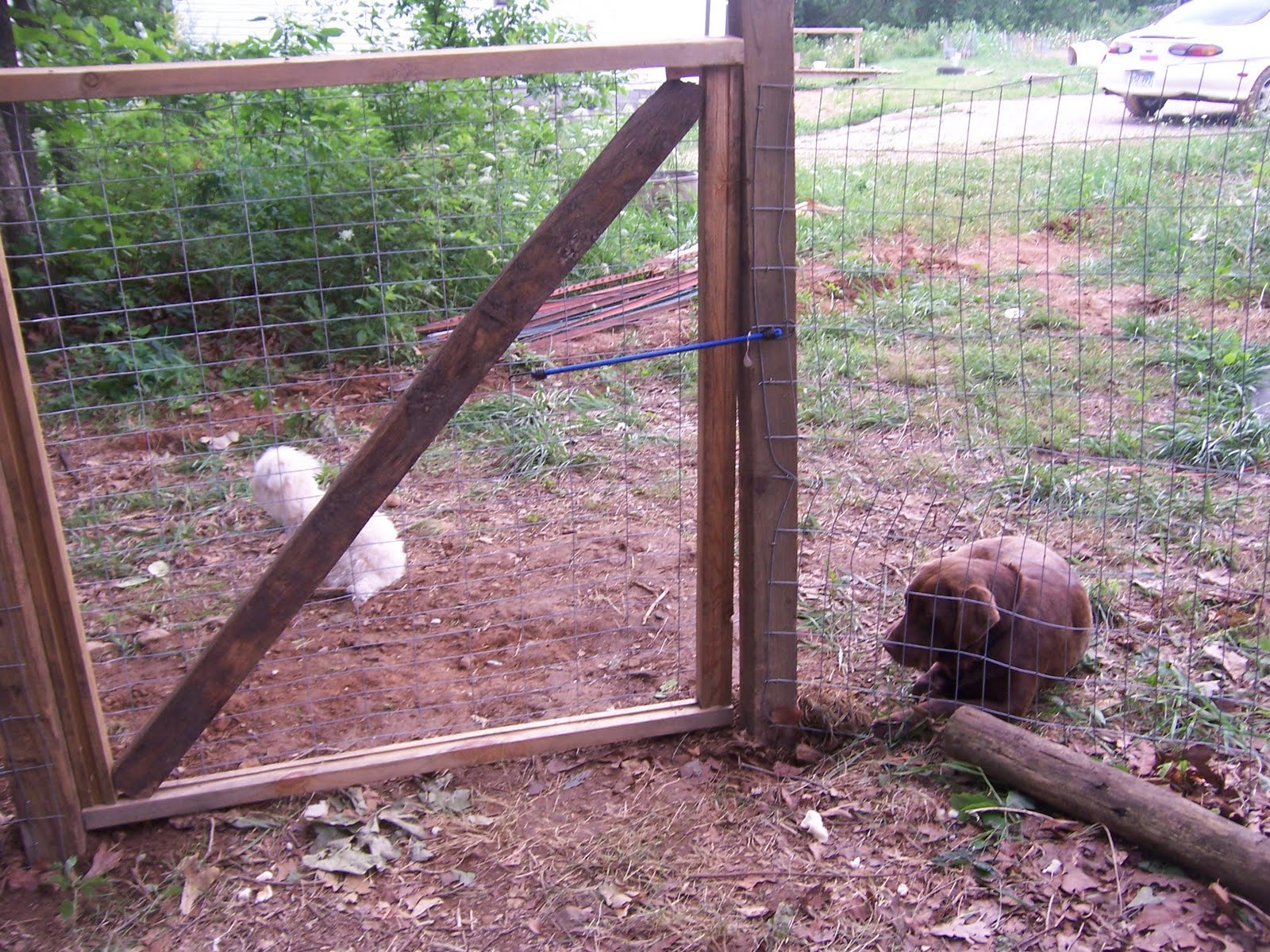
 1. Labradors do not belong on homesteads that have chickens! We had to find a home for our chocolate
lab Hershey because she liked our chickens as much as we do. Labs are wonderful dogs but it is their nature to hunt birds and small animals.
2. Plant a garden 3 times more as you think you might need, that way you might get at least some of the produce that the bugs don't eat!
3.Homesteading and living in the country is hard work! I did know this really, I just get reminded a lot.
4. Two vehicles are a must,with one of them hopefully being a truck. You will always find something on craigslist or freecycle that you need a truck for, but then again you also find just how much feed, hay or wood you can put in your car when the seats lay down. Note: big goats do not fit in the back of a car!
5. Grass and weeds grow faster than you can mow!
6. During the winter, when you think they will never get the road plowed, walk down and look at the road. It might be that the roads are clear as a bell and it's your long snowed in driveway that is keeping you from getting out. The two winters that we have been here have been the worst in the area, my husband has to stay in town for several days during the worst snows and we now park at the end of the driveway when the weather gets bad.
7.Dogs like to bring you gifts of dead things!
8.It takes 2 to 3 times longer to build something than you think it might.
9.Friends and family don't come to visit very often because they think you live in the boondocks, even though you tell them that you live on a paved road and 30min. isn't that long of a drive. Gas prices might have something to do with it also, :)
10. That no matter how hard homesteading is, it is a wonderful life and you wouldn't change a thing! (ok, maybe more money to get things done faster)

Happy Homesteading and Blessed Be!     

Sunday, August 7, 2011

Goats for us!

  When we lived in the apartment we had dreamed about having our own place, raising our animals and feeding our family from the gardens. To cement this dream we created a vision board with everything we wanted on our land and for our family.

 We now have chickens, a garden in it's first evolution and as of last week we have 3 goats. The local animal shelter sometimes receives animals besides dogs and cats, these animals are given to good homes free of charge. My sister who works there called me to see if I wanted some goats they had found and which the owner when found no longer wanted. We brought home a Toggenburg billy, a pregnant Nubian doe and a younger billy which is I am pretty sure their offspring. The trip home was as quick as we could make it as it was 110 outside and I was afraid they would get heatstroke. I ended up putting them in our large chicken pen until we can get more fencing up. Within the first 2 hours of them being here they showed me where the weakest spot in the fence was! We go out every evening when it cools off to reinforce any weak spots that we see. I plan on selling/trading the older buck and the doe after she has her kid for some Nigerian goats. I want to end up raising Nigerians and mini La Manchas someday.  The girls want to keep the youngest billy who they have named Panda, I told them to work hard with him to make him friendly and easy to handle, then we'll see. I am very proud of my girls, they take turns watering the animals and both spend a lot of time with the goats gaining their trust.
Lilly
Panda
Jake
These next pictures are of the goats I hope to raise soon.
Nigerian(isn't this one pretty!) They come in all colors.


Pygora Goats for thier fiber.
and Mini La Manchas (I love thier elf ears)

Friday, June 17, 2011

Chantecler and his Rock-a-doodle hens


Nervous Nellie's!


Hershey and Lexie


Beau is checking out the chicks.
  We have finally finished our chicken yard and have 8 hens and 2 roosters living happily in bug heaven. It didn't end up where we started as there was no shade for them. My neighbor put the hen house on skids and moved it under the trees for me. Zoe and I built a gate for the yard and with my friend Celeste help we put up the fence. I do like this location better and plan on adding more fence to make pens for whatever animals we end up with.